Our Location
304 North Cardinal St.
Dorchester Center, MA 02124

304 North Cardinal St.
Dorchester Center, MA 02124

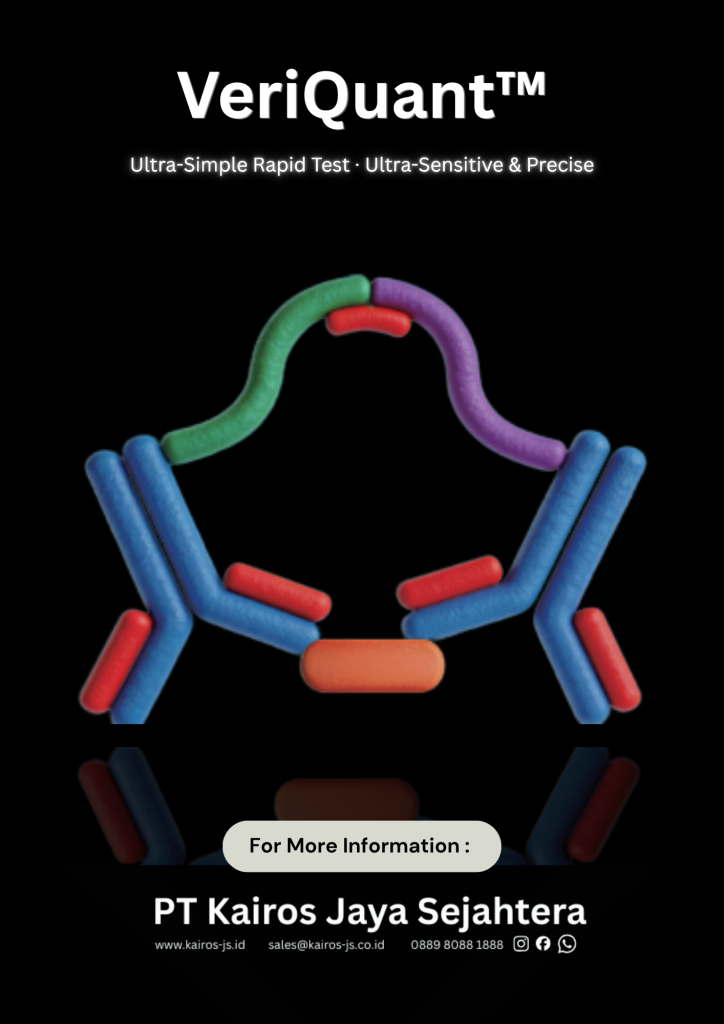
Protein detection and quantification are essential components of modern biomedical and life science research. From cytokine profiling and immunology studies to biomarker discovery and drug development, researchers increasingly require analytical methods that can provide high sensitivity while using limited sample volumes and maintaining an efficient workflow.
ELISA (Enzyme-Linked Immunosorbent Assay) remains one of the most widely used methods for protein quantification. However, conventional ELISA workflows may involve multiple incubation and washing steps, relatively high sample requirements, and additional optimization when protein concentrations vary substantially between samples.
To address these challenges, Reed Biotech has developed the VeriQuant™ Immunoassay Series, a next-generation protein detection platform based on Proximity Ligation Assay (PLA) technology. By combining antibody-based target recognition, site-specific antibody-oligonucleotide conjugation, and qPCR-based signal amplification, VeriQuant™ provides an alternative approach for sensitive and efficient protein quantification.
The performance of an immunoassay depends not only on antibody specificity but also on the efficiency of signal generation and the overall assay workflow.
In conventional ELISA, target proteins are detected through a series of antibody-binding, washing, enzyme-conjugate, substrate, and signal-detection steps. While this approach is well established, repeated washing and multiple manual handling steps can increase hands-on time and introduce potential sources of technical variation.
These considerations become particularly relevant when working with:
Low-abundance proteins or biomarkers
Limited biological samples
Serum or plasma samples
Cell culture supernatants
Animal research samples
Targets requiring a broad quantitative range
VeriQuant™ approaches protein detection from a different perspective by converting the recognition of a protein target into a measurable DNA signal that can subsequently be amplified using qPCR.
One of the key components of the VeriQuant™ platform is the use of antibody-oligonucleotide conjugates.
Reed Biotech’s™ technology is designed for site-specific conjugation of oligonucleotides to antibodies. Unlike conventional conjugation approaches that may result in heterogeneous labeling at multiple sites, site-specific conjugation is designed to provide more controlled attachment while preserving the antibody’s antigen-binding function.
According to Reed Biotech™ utilizes an enzyme-mediated conjugation strategy targeting the Fc region of antibodies. This approach is intended to provide consistent antibody–oligonucleotide conjugates while minimizing interference with antigen recognition.
This conjugation technology forms an important foundation for the subsequent PLA-based detection mechanism used in VeriQuant™.
The core principle of VeriQuant™ is Proximity Ligation Assay (PLA).
In the assay, two antibodies recognize different epitopes of the same target protein. Each antibody is linked to a specific oligonucleotide.
When both antibodies bind to the target protein, their attached oligonucleotides are brought into close proximity. This proximity enables the formation of a DNA template, which can then be amplified and quantified using real-time quantitative PCR (qPCR).
The overall principle can be summarized as:

Protein target → Dual-antibody recognition → Oligonucleotide proximity → DNA template formation → qPCR amplification → Protein quantification
This approach effectively converts protein recognition into a nucleic-acid-based signal, enabling the amplification capabilities of qPCR to be utilized for protein detection.
One of the notable features of the VeriQuant™ platform is its simplified workflow.
According to Reed Biotech, the assay can be performed through two major stages:

The sample or protein standard is combined with the corresponding antibody–oligonucleotide conjugates and incubated to allow target recognition.
The qPCR reaction components are subsequently added, followed by amplification and detection using a compatible real-time PCR instrument.
The workflow is designed as a homogeneous, wash-free assay, eliminating the repeated washing steps commonly associated with conventional ELISA workflows.
Reed Biotech reports a total assay time of approximately 2 hours, with a hands-on time of less than 20 minutes, depending on the specific assay and experimental conditions.
For laboratories already equipped with a real-time PCR instrument, this workflow may provide an opportunity to integrate protein analysis into an existing molecular biology platform.
Sample availability can be a significant consideration in biomedical research, particularly when working with animal samples, precious clinical specimens, or limited-volume biological fluids.
VeriQuant™ is designed to operate with a low sample input. Reed Biotech reports sample requirements starting from approximately 1 µL, depending on the specific assay.
A low-volume requirement can be particularly useful when researchers need to preserve valuable samples for additional downstream analyses.
Another important consideration in protein analysis is the ability to quantify targets across a broad concentration range.
Samples with substantially different protein concentrations may require extensive dilution optimization when using conventional immunoassays. VeriQuant™ is designed with a broad dynamic range, with Reed Biotech reporting a range of more than five orders of magnitude for the platform.
This broad range may help reduce the need for repeated sample dilution and allow researchers to analyze samples with substantially different target concentrations within a single assay framework.
For biomarker research, detecting proteins present at very low concentrations can be particularly challenging.
By combining dual-antibody recognition with DNA-based signal amplification and qPCR detection, VeriQuant™ is designed to provide high analytical sensitivity.
Reed Biotech reports femtogram-level detection capability for the VeriQuant™ platform. However, analytical sensitivity is target-dependent, and the actual detection range and limit of detection should always be evaluated based on the specifications of the individual assay.
Examples of VeriQuant™ assays include:
*Sensitivity values are target-specific and should be interpreted according to the specifications of each individual assay.
The combination of high sensitivity, low sample input, broad dynamic range, and a simplified wash-free workflow makes VeriQuant™ relevant to a wide range of research applications.
Potential applications include:
Cytokine and inflammatory biomarker analysis
Immunology research
Cell culture studies
Animal model research
Biomarker discovery
Pharmacological research
Disease-related protein analysis
Low-abundance protein detection
The VeriQuant™ portfolio includes assays for several commonly investigated targets, including IL-6, TNF-α, IL-1β, IFN-γ, IL-10, and IL-17A, with assays available for different species depending on the target.
The development of VeriQuant™ reflects a broader evolution in protein detection technology.
Rather than relying solely on enzymatic colorimetric or fluorescent signal generation, the platform combines antibody specificity with nucleic-acid amplification. Site-specific antibody-oligonucleotide conjugation provides the connection between protein recognition and DNA-based signal generation, while PLA enables target-dependent formation of an amplifiable DNA template.
The result is a workflow that integrates principles from immunoassay and molecular biology in a single protein detection platform.
For researchers working with low-abundance biomarkers, limited sample volumes, or experiments requiring a broad quantitative range, technologies such as VeriQuant™ provide an alternative approach worth considering alongside established immunoassay methods.
Protein detection continues to evolve as research increasingly demands greater sensitivity, lower sample consumption, and more efficient workflows.
With its combination of ReedLytix™ site-specific antibody conjugation, PLA-based target recognition, and qPCR signal amplification, the VeriQuant™ Immunoassay Series offers a new approach to protein quantification that bridges immunoassay technology with molecular detection.
For researchers looking to explore alternative solutions for sensitive protein detection, VeriQuant™ provides an option designed around the needs of modern laboratory workflows.
PT Kairos Jaya Sejahtera supports researchers and laboratories in Indonesia with access to life science research products and technical information.
Contact our team to learn more about VeriQuant™ assay availability, target selection, specifications, and applications for your research.
PT Kairos Jaya Sejahtera
🌐 kairos-js.id
📧 sales@kairos-js.co.id
📱 Customer Service: +62 889 8088 1888