Our Location
304 North Cardinal St.
Dorchester Center, MA 02124

304 North Cardinal St.
Dorchester Center, MA 02124

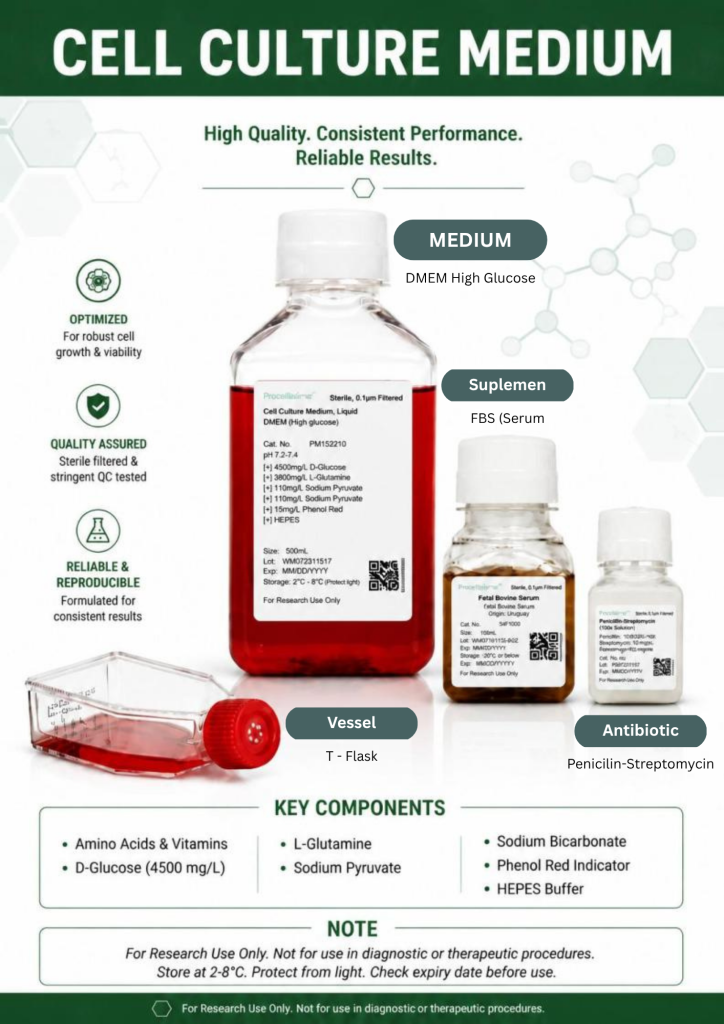
Successful cell culture experiments are highly dependent on the quality of the culture media used. Cell culture media is not merely a nutrient solution, but the core foundation that determines cell growth, viability, stability, and overall biological performance. Therefore, selecting the right media is a critical factor in generating consistent, reproducible, and high-quality experimental data in modern cell biology research.
Cell culture media is designed to mimic the in vivo physiological environment by providing essential components such as basal medium, amino acids, vitamins, inorganic salts, glucose, serum, buffers, and various supportive additives. Each component plays a specific role and works synergistically to create an optimal environment for cell growth and function.
Basal medium serves as the fundamental component of any cell culture system, providing essential nutrients such as amino acids, vitamins, inorganic salts, and energy sources like glucose. It is crucial for maintaining osmotic balance, supporting basic cellular metabolism, and ensuring a stable environment for cell proliferation. Without a high-quality basal medium, cells cannot maintain homeostasis or achieve optimal growth. Basal media products from Procell Life Science & Technology are designed to deliver consistent performance and high stability across a wide range of cell culture applications.
Amino acids are the fundamental building blocks of proteins, which are essential for cell growth, differentiation, and function. Media formulations typically include both essential and non-essential amino acids to ensure that cells can maintain efficient protein synthesis and metabolic activity. Adequate amino acid availability directly influences cell proliferation, viability, and long-term culture stability.
Vitamins act as essential cofactors for numerous enzymatic reactions within the cell. Although required in small amounts, they play a critical role in energy metabolism, DNA synthesis, and regulation of cell growth. A deficiency in vitamins can significantly reduce metabolic activity and impair cell proliferation.
Inorganic salts such as sodium chloride, potassium chloride, and calcium chloride are responsible for maintaining osmotic balance and ionic homeostasis, which are essential for membrane function and enzymatic activity. Glucose, on the other hand, serves as the primary energy source for cells, fueling ATP production through metabolic pathways such as glycolysis. Proper balance of these components is essential for maintaining normal cellular physiology.
Fetal bovine serum (FBS) is a complex supplement that provides growth factors, hormones, lipids, adhesion molecules, and other essential nutrients required for cell viability and proliferation. Serum enhances cell attachment and protects cells from environmental stress. However, due to its complex and variable nature, serum may introduce batch-to-batch variability, making standardization and quality control critical for reproducible results.
Buffers such as HEPES and sodium bicarbonate are used to maintain the pH of culture media within the optimal physiological range (typically 7.2–7.4). Stable pH is essential for maintaining enzyme activity, cellular metabolism, and overall cell health. Even slight pH fluctuations can significantly affect experimental outcomes.
Antibiotics such as penicillin-streptomycin are commonly added to cell culture media to prevent bacterial contamination. While effective, their use should be limited as they may mask poor aseptic techniques and potentially influence cellular behavior. Ideally, proper sterile techniques should be prioritized over reliance on antibiotics.
Phenol red is a pH indicator commonly included in cell culture media. It provides a visual representation of media conditions, turning yellow under acidic conditions and pink/red under neutral to alkaline conditions. Although useful for routine monitoring, phenol red may interfere with certain assays, making phenol red-free formulations preferable for specific applications.
Selecting the right cell culture media is essential for ensuring experimental success and high-quality biological data. Each component within the media plays a critical role in supporting cell growth, stability, and physiological function, making precise formulation a key factor in modern cell culture practices.
Cell culture media products from Procell Life Science & Technology are designed to support a wide range of research applications, from basic cell biology to advanced studies such as cell-based assays, protein expression, and translational research, all with consistent quality and reliable performance.
WhatsApp us