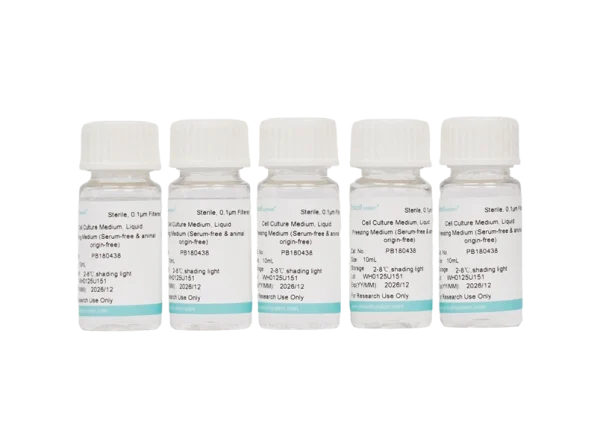
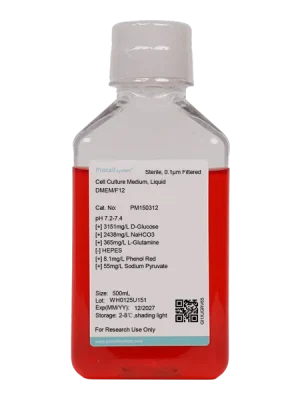
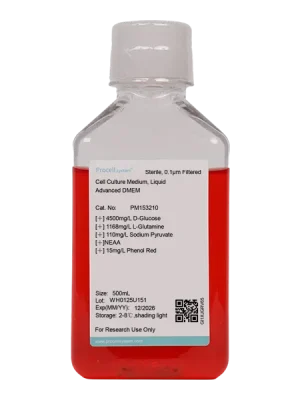
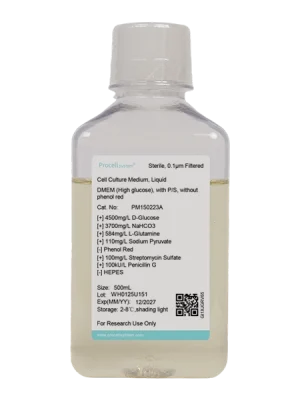
In order to preserve the biological activity of cells in vitro, cells must be cryopreserved for a long time and then revived and cultured when needed. Currently, the most commonly used technique for cell freezing is liquid nitrogen cryopreservation, which primarily involves adding an appropriate amount of protectant to slowly cool the cells to a specified temperature range, thereby protecting the cells.
The Serum-free Cell Freezing Medium is a specialized cryopreservation product developed by Procell for use with hundreds of cell types, continuously optimizing experimental conditions for cell cryopreservation and resuscitation in long-term cell research.
The product contains a cell sedimentation stabilizer, which can delay the sedimentation rate of cells during the cryopreservation process, preventing cells from squeezing each other and affecting the effectiveness of cell cryopreservation. In addition, a variety of cryoprotectants, such as cell membrane protectors, permeable intracellular membrane protectors, and non-permeable cell protectors, are added. These components combine with water molecules in the solution to hydrate and weaken the crystallization process of water, increasing the viscosity of the solution and reducing the formation of ice crystals, which can greatly reduce the damage of ice crystals to cells during cryopreservation, and effectively improve the survival rate of cells after resuscitation. The product formula is clear, does not contain serum or animal-derived protein, which can reduce contamination risk from bacteria, viruses, and mycoplasma, and ensure the safety of frozen cells. It is not only suitable for conventional cell lines, primary cells, but also serum-free culture cells and protein-expressing cells.
Compared with traditional cryopreservation media, there is no need for tedious and time-consuming gradient freezing steps, and no need for expensive program cooling equipment. Cells can be directly resuspended and stored long-term in a -80°C ultra-low temperature freezer, but it is essential to ensure the stability of the freezer’s temperature. For more prolonged and stable cell storage, frozen cells can be placed in a -80°C ultra-low temperature freezer overnight (>16 hours) before transferring them to a liquid nitrogen tank for long-term storage.