Our Location
304 North Cardinal St.
Dorchester Center, MA 02124

304 North Cardinal St.
Dorchester Center, MA 02124

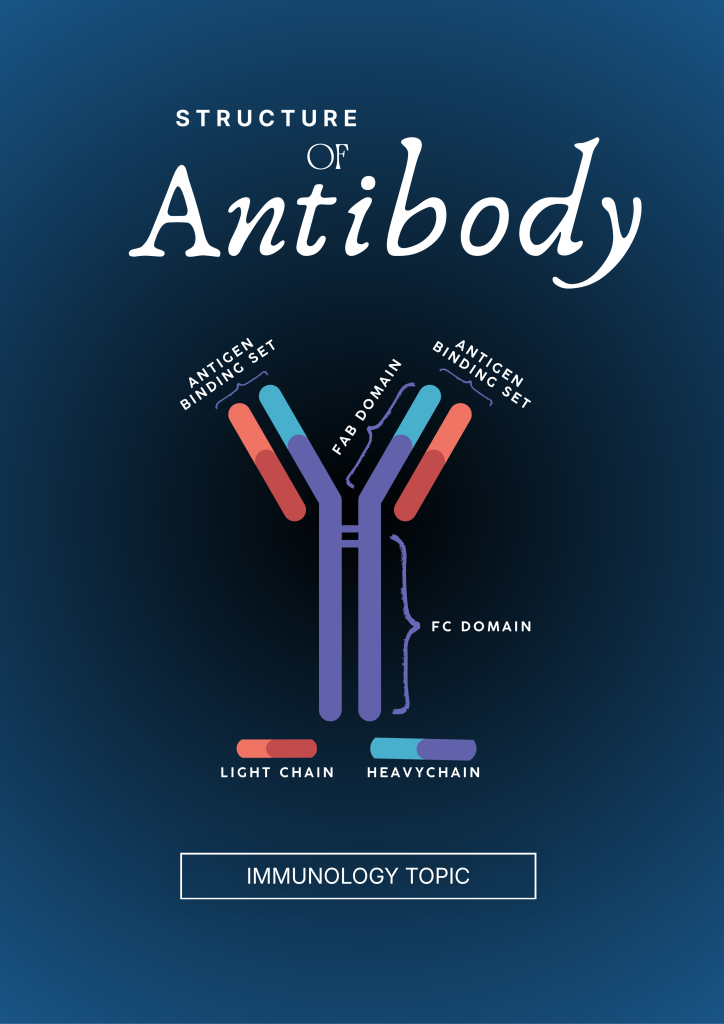
Antibodies (immunoglobulins) are highly specific proteins produced by the immune system to recognize and bind target antigens. This precise antigen antibody interaction forms the foundation of modern molecular biology, enabling accurate detection, quantification, and characterization of proteins. Structurally, antibodies consist of two heavy chains and two light chains, forming a Y-shaped molecule with a variable region (Fab) responsible for antigen binding and a constant region (Fc) that defines functional properties and isotype classification. This dual functionality makes antibodies indispensable across a wide range of research and diagnostic applications.
Understanding Antibody Isotypes for Experimental Accuracy
Antibody isotypes are classified based on the structure of their heavy chain constant regions, which directly influence biological activity and assay performance. The five primary isotypes IgG, IgM, IgA, IgE, and IgD each exhibit distinct functional characteristics. IgG is the most widely used in research due to its stability and high specificity, while IgM provides strong binding avidity due to its pentameric structure. IgA plays a critical role in mucosal immunity, whereas IgE is associated with immune hypersensitivity responses, and IgD functions primarily in B cell activation. Selecting the appropriate isotype is essential for optimizing assay sensitivity, reducing background noise, and ensuring compatibility with secondary detection systems.
Monoclonal vs Polyclonal Antibodies: Choosing the Right Specificity
The choice between monoclonal and polyclonal antibodies significantly impacts experimental outcomes. Monoclonal antibodies are derived from a single B-cell clone and recognize a single epitope, offering superior specificity and batch-to-batch consistency ideal for quantitative and highly controlled assays. In contrast, polyclonal antibodies consist of a heterogeneous mixture that targets multiple epitopes on the same antigen, providing enhanced sensitivity and robust signal detection, particularly when antigen expression is low or structurally variable. Understanding these differences allows researchers to balance precision and sensitivity according to experimental needs.
Optimizing Detection Strategies for Reliable Results
Antibody-based detection methods are broadly categorized into direct and indirect approaches. Direct detection utilizes labeled primary antibodies, offering a streamlined workflow with reduced assay time, though often with limited signal amplification. Indirect detection employs labeled secondary antibodies, enabling signal amplification and increased flexibility, particularly in multiplex assays. This approach also allows researchers to leverage isotype and species specificity, enhancing detection accuracy and experimental scalability.
Broad Applications Across Research Platforms
Antibodies serve as critical reagents in diverse experimental workflows. In protein analysis, they are widely used in techniques such as Western blotting and ELISA for quantitative measurement. For spatial localization, immunofluorescence (IF), immunohistochemistry (IHC), and immunocytochemistry (ICC) provide high-resolution visualization of target proteins within cells and tissues. In addition, antibodies are essential for protein isolation techniques like immunoprecipitation (IP) and chromatin immunoprecipitation (ChIP), as well as in cell analysis applications including flow cytometry and fluorescence-activated cell sorting (FACS). This versatility underscores their central role in both basic and translational research.
Key Considerations for Antibody Selection
Selecting the right antibody requires careful evaluation of several critical parameters. Researchers must ensure that the antibody is validated for the intended application, as performance can vary significantly between techniques such as Western blot, immunofluorescence, and ELISA. Antigen characteristics including protein conformation and epitope accessibility must also be considered to ensure effective binding. Host species selection is crucial for compatibility with secondary antibodies, while conjugation type (e.g., enzyme or fluorophore) determines the detection method. High-quality antibodies should be supported by robust validation data, including specificity testing and published references, to ensure reproducibility and reliability.
Ensuring Reproducibility Through Antibody Validation
Antibody validation is a critical step in ensuring data integrity and reproducibility. Advanced validation strategies include orthogonal validation using antibody-independent methods, genetic validation through knockdown or knockout models, and confirmation using independent antibodies targeting the same protein. Additional approaches such as mass spectrometry further strengthen confidence in antibody specificity. Implementing these validation strategies minimizes experimental variability and enhances the credibility of research findings.
Empowering High Confidence Research
A comprehensive understanding of antibody isotypes, specificity, and validation principles is essential for generating reliable and reproducible data. By selecting the appropriate antibody and optimizing experimental conditions, researchers can significantly improve assay performance and data quality. High-quality antibodies, supported by rigorous validation and technical expertise, are key to advancing scientific discovery and driving innovation in life science research.
WhatsApp us